Why Hot Water Slab Lines Fail Prematurely in Lodi
In residential plumbing systems across Lodi, hot water lines fail at significantly higher rates than cold water lines. Homeowners often discover a leak not from visible water, but from an isolated warm spot on floor Lodi surfaces. A hot water slab leak repair Lodi specialist can diagnose whether the failure stems from thermal expansion fatigue, aggressive municipal water chemistry, or substandard sub-slab installation.
When hot water flows through subterranean copper tubing, the metal naturally expands. When water flow ceases, the copper cools and contracts. Over thousands of heating cycles, this constant micro-movement causes uninsulated copper tubing to rub against abrasive gravel beds, sharp aggregate, or steel reinforcing rebar embedded within the concrete foundation. Eventually, friction erodes the outer pipe wall, resulting in an active hot water line leak under slab Lodi foundations.
Warning Signs of a Hot Water Slab Leak
Hot water leaks present specific symptoms that differentiate them from general cold-line plumbing leaks. If you notice any combination of the following indicators, immediate attention is required:
- Noticeably warm floor areas: Hardwood, linoleum, or ceramic tile feels unusually hot or warm to barefoot touch in localized spots.
- Water heater running constantly Lodi: Your gas burner or electric heating element fires continuously without anyone drawing hot water at fixtures.
- Dramatic spikes in gas or electric bills: Heating hundreds of gallons of escaping water every day rapidly increases monthly utility expenses.
- Depleted hot water capacity: Showers run lukewarm or turn cold rapidly because heated water is constantly discharging into the foundation subgrade.
- Hissing sound near the water heater: Water rushing through the tank inlet and outlet valves even when all home fixtures are shut off.
- Dampness along baseboards: Heat and moisture migrate upward through perimeter drywall, causing warping, baseboard separation, or mold growth.
Testing Your Water Heater Right Now
If you suspect a hot water slab leak, walk to your water heater. Touch the hot water outlet pipe leaving the top of the tank. If it is vibrating or emitting a continuous rushing sound while no household fixtures are in use, water is actively escaping. Shut off the cold water shutoff valve directly above the tank to stop the leak temporarily, then call our team at (888) 205-7875.
How Hot Water Leaks Are Found With Thermal Imaging
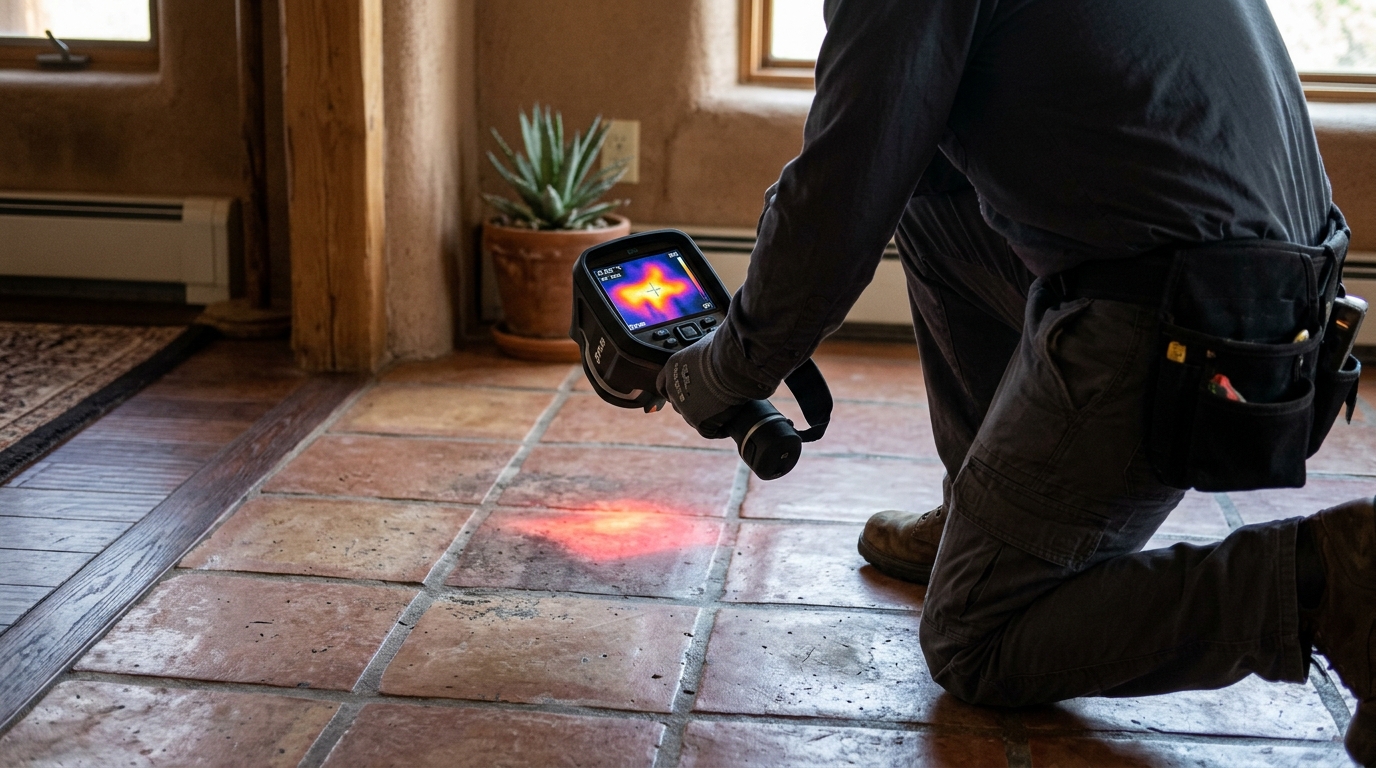
Infrared thermography is the gold standard for locating sub-slab hot water failures. Because escaping hot water elevates the temperature of the concrete foundation and finished floor materials above it, high-resolution thermal cameras reveal radiant heat signatures that are completely invisible to the naked eye.
Our technicians scan the entire living area, mapping subsurface thermal gradients. The thermal camera captures a distinct heat bloom that radiates outward from the exact breach point. We cross-reference this thermal data with acoustic ground microphones and line-tracing equipment to confirm the precise coordinate and depth before formulating a repair plan.
Feel a Warm Spot on Your Floor?
Don't let hot water waste energy and erode your foundation. Speak directly with a local Lodi diagnostic technician.
Call (888) 205-7875Repair Options: Direct Spot Repair vs. Overhead Reroute
Once the exact failure point is mapped, homeowners must choose between a direct excavation repair and an overhead pipe reroute:
Direct Slab Spot Repair
Involves breaking a small section of concrete floor, digging down to the hot water pipe, cutting out the ruptured section, and brazing in a new copper line. While feasible for localized mechanical damage in newer homes, direct repair leaves the remaining aged copper tubing beneath the concrete, leaving the system vulnerable to future hot water line leaks.
Overhead Hot Line Reroute
The permanent, non-destructive solution recommended for most Lodi homes. The leaking underground line is disconnected and permanently abandoned. A new high-temperature rated PEX or copper line is routed through interior wall cavities and attic spaces, completely bypassing the foundation and eliminating concrete demolition.
For older properties with repeated leaks, an overhead slab leak reroute or complete whole-house repiping is often far more economical and protective than repeated concrete jackhammering.
Long-Term Foundation Protection for Lodi Properties
Hot water escaping beneath a foundation poses acute risks in San Joaquin County due to the area expansive clay soils. Constant subterranean heat accelerates moisture vapor migration into flooring, causing hardwood warping, tile delamination, and microbial growth. Prompt intervention restores your plumbing system integrity and preserves the structural stability of your foundation.
We provide comprehensive services including electronic slab leak detection and assist with insurance documentation to help you navigate your homeowner policy claim.
Serving All Lodi Neighborhoods and Surrounding Towns
Our specialized diagnostic trucks serve residential properties across Downtown Lodi, as well as homes near Lodi Lake, the Mokelumne River corridor, and residential areas along SR-99. We also provide full service coverage to neighboring communities including Galt and August. Review our complete coverage area on the Service Areas page.
Frequently Asked Questions About Hot Water Slab Leaks
Why is the floor warm even when the heating system is off?
When a pressurized hot water pipe leaks beneath a concrete slab, 120-degree water continuously saturates the concrete and subgrade, heating the floor from underneath. This creates persistent warm or hot zones under tile, carpet, or hardwood.
Can a hot water slab leak damage my water heater?
Yes. When a slab leak occurs, the water heater operates almost continuously to replenish the escaping hot water. This constant firing causes extreme wear on burners, heating elements, and the tank lining, frequently causing premature water heater failure.
How quickly does a hot water slab leak cause structural damage?
Continuous hot water discharge can soften subgrade soils and trigger localized foundation movement within days to weeks. The longer the leak runs, the greater the risk of cracked foundation slabs, ruined flooring, and elevated utility expenses.